
Farmers for Forest Protection Foundation (4F)
Sanggau District, West Kalimantan – The Farmers for Forest Protection Foundation (4F) in collaboration with the National Research and Innovation Agency (BRIN) carried out a series of field research activities on the impact of forest conservation and management on land productivity and plant disease control. The activities took place from 9–13 February 2026 in several villages in Sanggau District, West Kalimantan.
This research was part of the program “Support for Smallholder Farmers, Indigenous Peoples and Local Communities in Kalimantan to Strengthen Land Rights, Inclusion in Decision-Making, Economic Benefits, Fair Access, and Readiness for Global Markets.” The programme is supported by the Ford Foundation and the Ministry of Home Affairs, and aims to strengthen the capacity of smallholder farmers and indigenous communities in the sustainable management of natural resources.
This activity was also part of efforts to generate field-based scientific data on the relationship between forest conservation practices and community farming conditions, particularly in addressing the challenges of plant diseases that affect land productivity.
Community Dependence on Agriculture and Forestry
The districts of Sanggau and Sekadau are areas where the local communities rely heavily on the agriculture and forestry sectors as their primary sources of livelihood. The majority of farmers manage oil plantations, mixed-crop plantations, and utilise forest products to meet their household needs.
However, in recent years, this region has been facing various pressures on the forest ecosystem, including land-use conversion and unsustainable management practices. These conditions not only affect environmental quality but also impact land productivity and increase crop susceptibility to disease.
One disease of particular concern in this study is infection by the fungus Ganoderma, a soil-borne pathogen known to cause basal stem rot in oil palm plants. This disease can spread slowly through the soil and plant root residues, and has the potential to cause mass tree mortality if not detected early.
Through this research, the team hopes to gain a more comprehensive insight into the relationship between forest ecosystem conditions, soil quality, and plant growth in community farming systems.
Participatory Discussions with Farmers and Village Authorities
The research activities began with participatory discussions with village authorities and farmers in the three research villages: Menyabo Village (Tayan Hulu Sub-district), Gunam Village, and Embala Village (Parindu Sub-district).
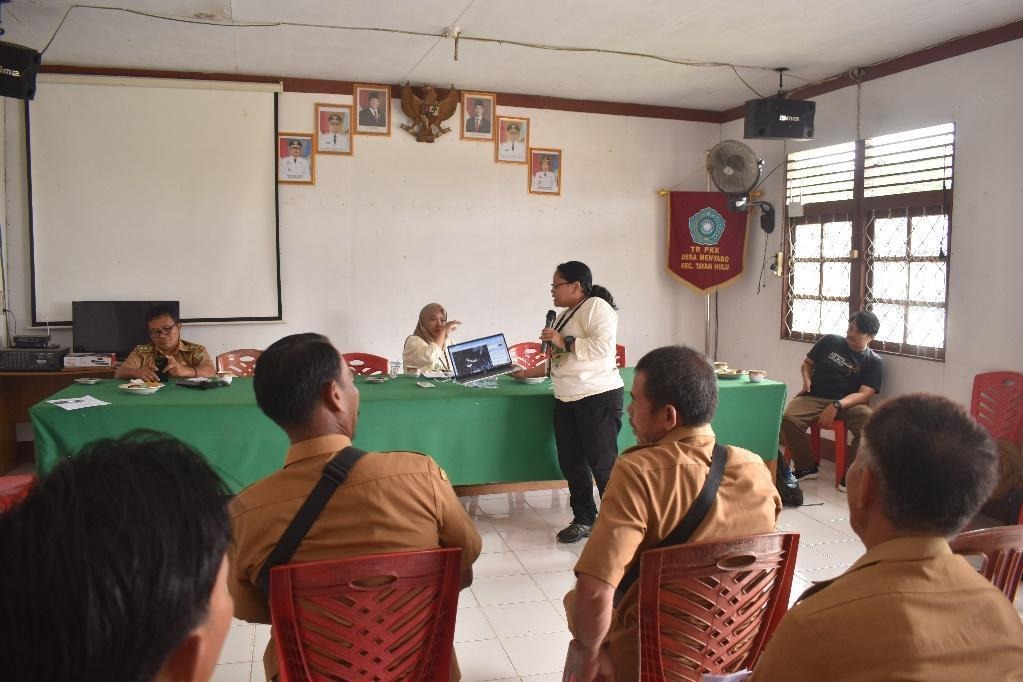
Picture 1. Discussion with farmers and local residents in Menyabo Village, Tayan Hulu Sub-district, Sanggau District.
The purpose of this discussion was to introduce the research objectives, whilst also opening a space for dialogue between researchers and the community regarding the agricultural conditions they face on a daily basis.
During the meeting, researchers from BRIN explained the characteristics of Ganoderma disease, including early symptoms that farmers can recognise in the field. Some common signs include leaves turning yellow more quickly, leaf tips failing to develop fully, and weakened and drooping leaf sheaths. In advanced stages, this fungus can cause damage to the plant’s vascular system, ultimately killing the tree.
The researchers also explained that the presence of well-preserved natural forests around plantations can act as an ecological buffer system. Biodiversity within the forest, including soil microorganisms, has the potential to help maintain ecosystem balance, thereby naturally suppressing the development of plant pathogens.
In addition to addressing crop diseases, the discussion also covered various other agricultural issues, such as the use of fertilisers, the selection of high-quality seedlings, and strategies for more efficient oil palm plantation management. Farmers also shared their experiences regarding changes in land conditions and the challenges they face in maintaining plantation productivity.
Field Surveys and Plant Sampling
Following discussions with the community, the team continued their activities with field surveys and the collection of oil palm plant samples. Sampling was carried out at five research sites, comprising two sites in Menyabo Village, one site in Gunam Village, and two sites in Embala Village.
At each research site, the team collected samples from both healthy oil palm trees and those showing signs of disease. This approach was adopted to compare the biological conditions between healthy and diseased plants.
The samples collected included soil around the trunk base, plant root tissue, and fungi found in the root zone. These samples will then be analysed further in the laboratory to identify pathogen characteristics and understand the disease spread at the landscape level.

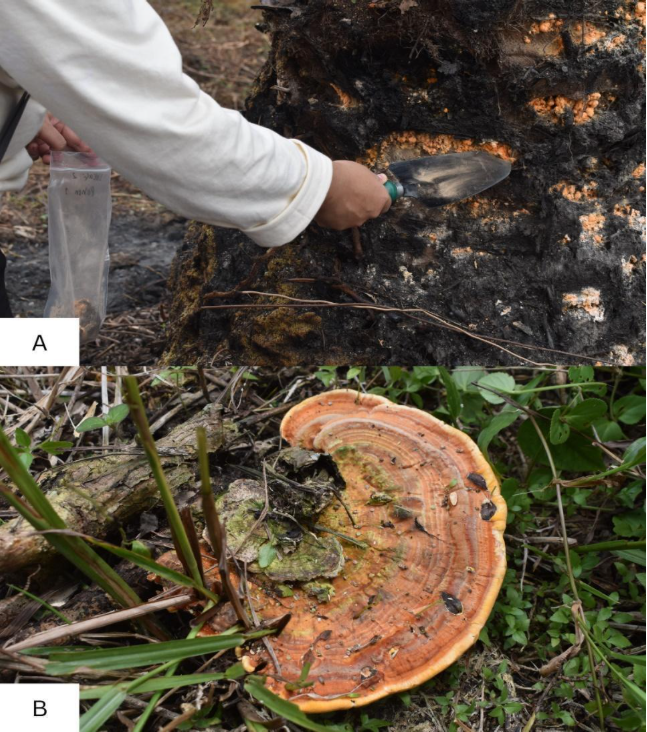
Picture 2. Fungi found on oil palm trees; (A) a non-Ganoderma fungus causing disease in oil palm trees in Menyabo Village; (B) Ganoderma fungi in the soil of a community plantation in Gunam Village.
Aside from collecting biological samples, the team also measured several environmental parameters at each research site. The parameters recorded included: soil fertility, soil moisture, soil pH, light intensity, and air temperature. This data is crucial for understanding the relationship between environmental conditions and the plants’ susceptibility to disease.
To complement the field analysis, the research team also used drone technology to capture aerial imagery of the study sites. This spatial data will be used to map the patterns of plant disease distribution at a landscape scale and to help elucidate the relationship between land cover conditions and plant health.
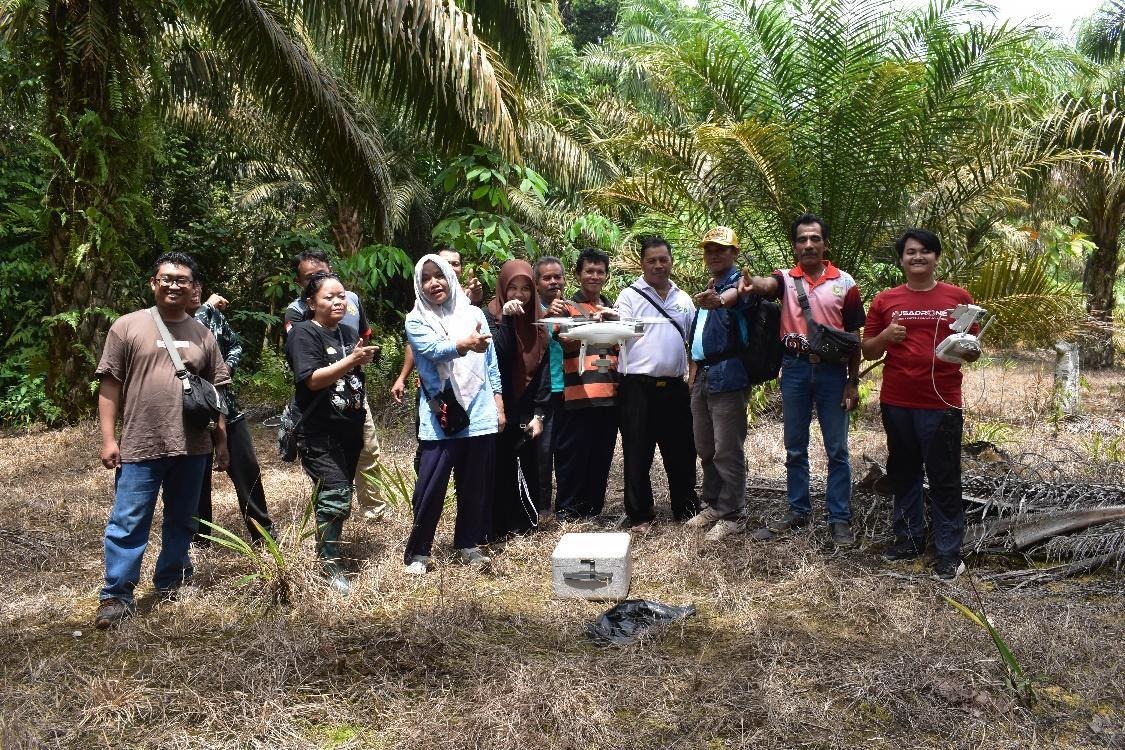
Picture 3. The BRIN research team was about to fly a drone in Embala Village.
The Role of Forests in Maintaining Ecosystem Balance
During a discussion held in Embala Village, local residents emphasised the importance of preserving the remaining customary forests in their neighbourhood. For the local community, the forest serves not only as a source of livelihood, but also as part of their cultural identity and ancestral heritage.
The community also highlighted that the presence of forests plays a vital role in maintaining water availability and environmental quality, particularly amidst the expansion of monoculture plantations across various regions.
Furthermore, the discussion also opened up opportunities for the development of economic diversification based on non-timber forest products. Some local plants with economic potential found in the forest area include mentawa (Artocarpus anisophyllus), wild durian (Durio oxleyanus), pekawai (Durio kutejensis), sengkubak, and kabok.
The development of these local commodities is seen as a potential alternative strategy to improve community welfare without having to rely entirely on palm oil.
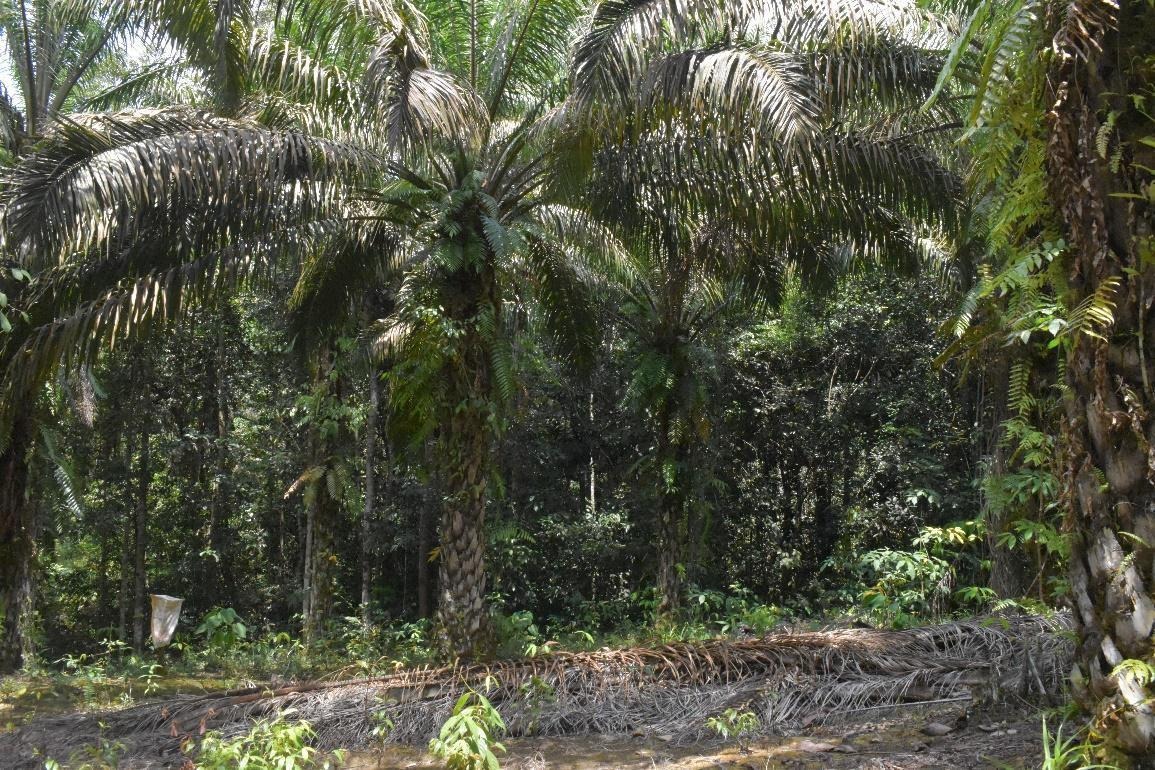
Picture 4. The location where samples of healthy oil palms were taken near Rimba Besar in Embala Village.
Strengthening Collaboration between Researchers, Academics and Practitioners
This set of research activities concluded on 13 February 2026 with the participation of 4F and BRIN in the 52nd Scientific Seminar for Practitioners and Industry (RAMIN) at the Faculty of Forestry, Tanjungpura University.
On this occasion, the Farmers for Forest Protection Foundation (4F) and the Faculty of Forestry, Tanjungpura University (Fahutan UNTAN) officially signed a Memorandum of Understanding (MoU) as a step towards strengthening collaboration in the fields of research, education, and community capacity building.
This collaboration is expected to encourage student involvement in field research, strengthen the integration of academic theory and practice at the village level, and support the development of innovations in sustainable forest and agricultural management.
Collaboration between research institutions, universities, and community organisations like this is an important step in building a forest management model based on knowledge and field experience.
Follow-up Actions of the Research
The results of the sampling activities will be further analysed through genetic and spatial analyses to understand the causes and patterns of Ganoderma disease spread in the study area.
It is hoped that the findings of this research will lead to recommendations for improved agricultural practices, particularly regarding the prevention and control of plant diseases in community plantations.
Furthermore, the research findings will be coordinated with the Sanggau District Plantation Office as part of a joint effort to enhance agricultural resilience, maintain landscape sustainability, and strengthen the welfare of smallholder farmers in West Kalimantan.